Emotional Literacy Card Deck
Illustration + Character Design + Visual System
Children feel deeply — often before they have the words to express it.
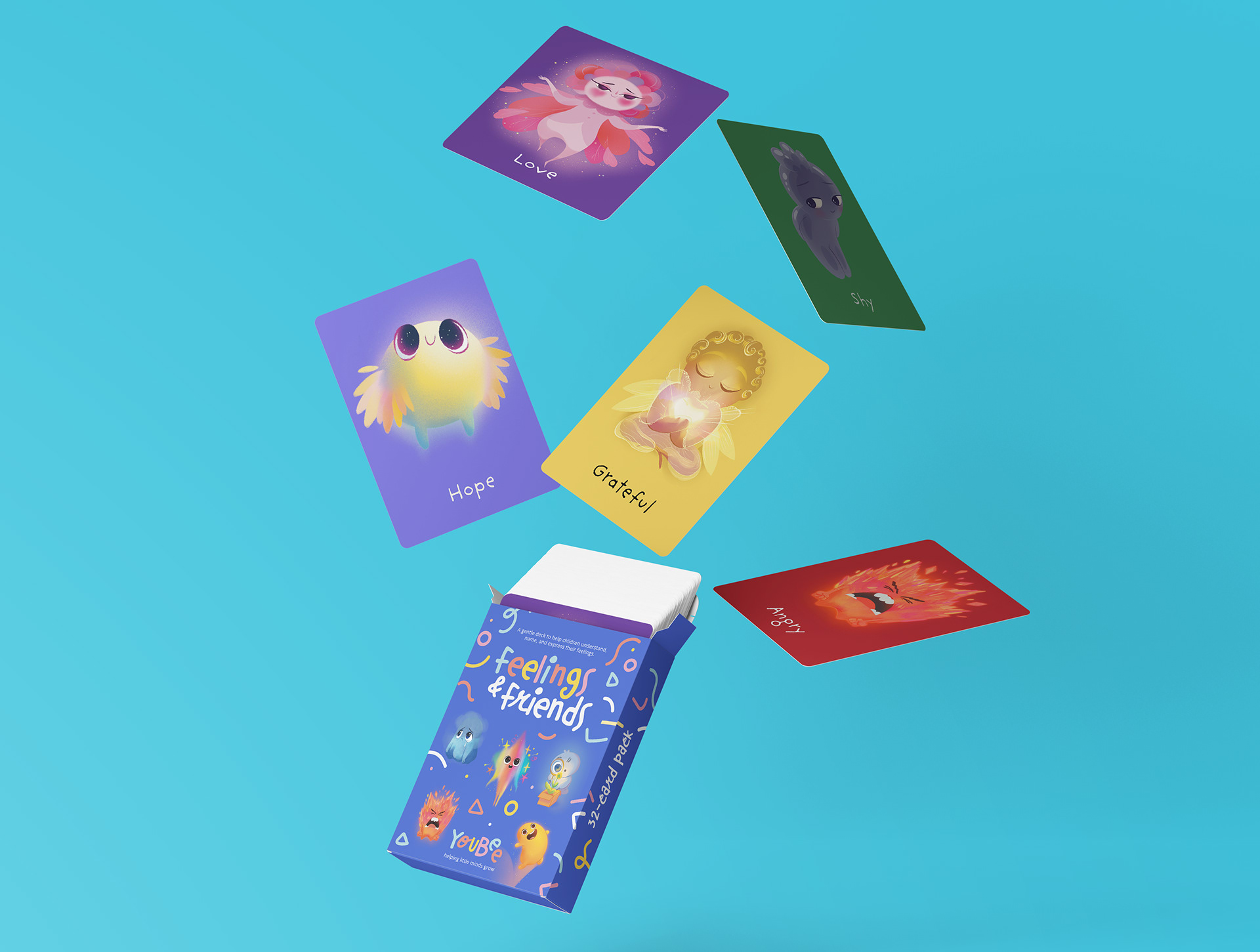
The Youbee Emotional Literacy Deck is a set of 34 illustrated cards designed to help children
recognise, name, and talk about their feelings through play.
The Youbee Emotional Literacy Deck is a set of 34 illustrated cards designed to help children
recognise, name, and talk about their feelings through play.
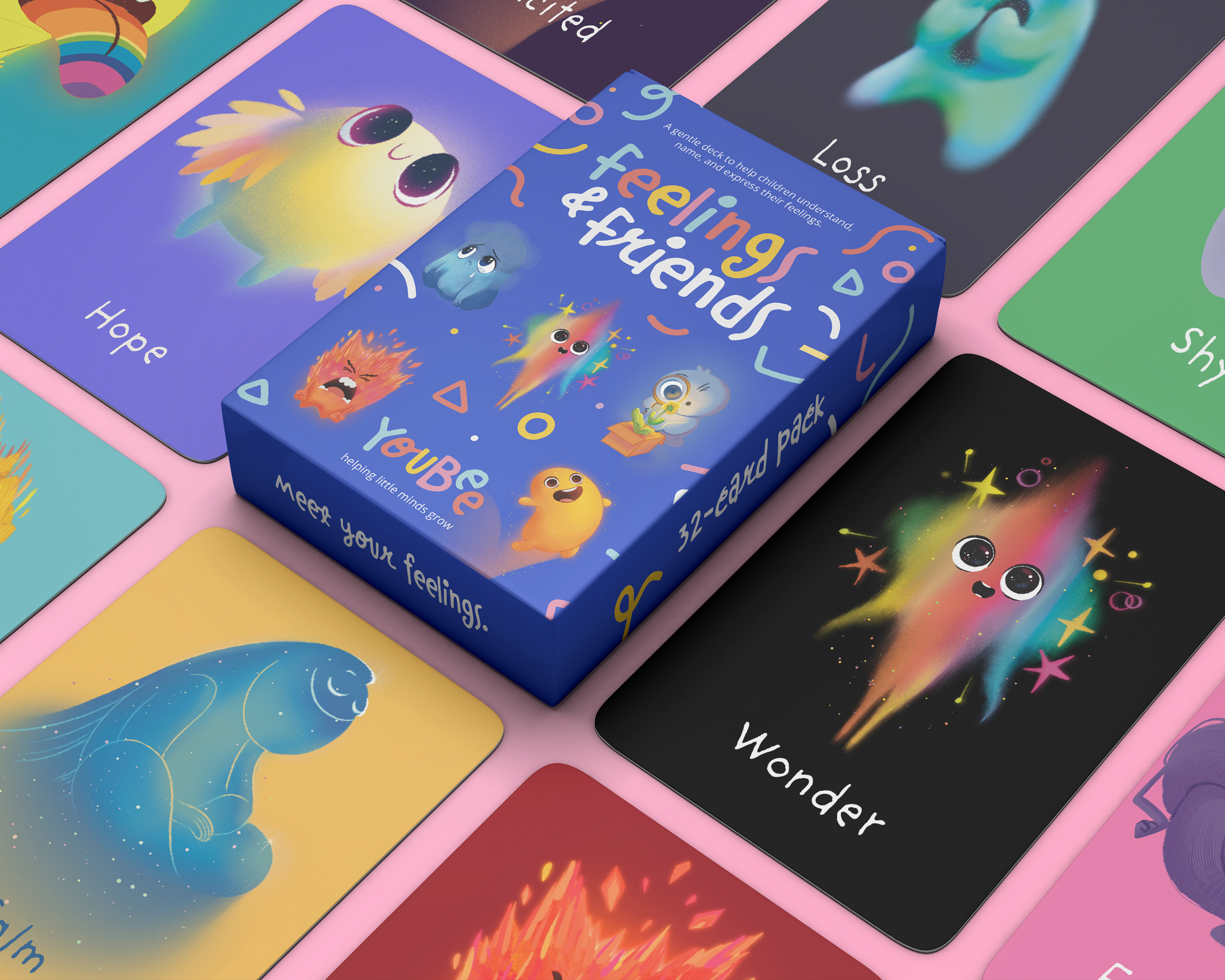
Youbee is a children’s learning brand focused on creating
thoughtful, play-based tools for early development.
thoughtful, play-based tools for early development.
This deck was designed as an early emotional learning tool:
something children could intuitively connect with,
and adults could use to guide meaningful conversations.
something children could intuitively connect with,
and adults could use to guide meaningful conversations.
The Challenge
How do you illustrate emotions in a way that is:
• Clear for young children
• Emotionally safe (not overwhelming or scary)
• Visually engaging without being distracting
• And consistent across an entire system of 34 cards
• Clear for young children
• Emotionally safe (not overwhelming or scary)
• Visually engaging without being distracting
• And consistent across an entire system of 34 cards
Without reducing feelings to clichés or exaggeration.
The Idea
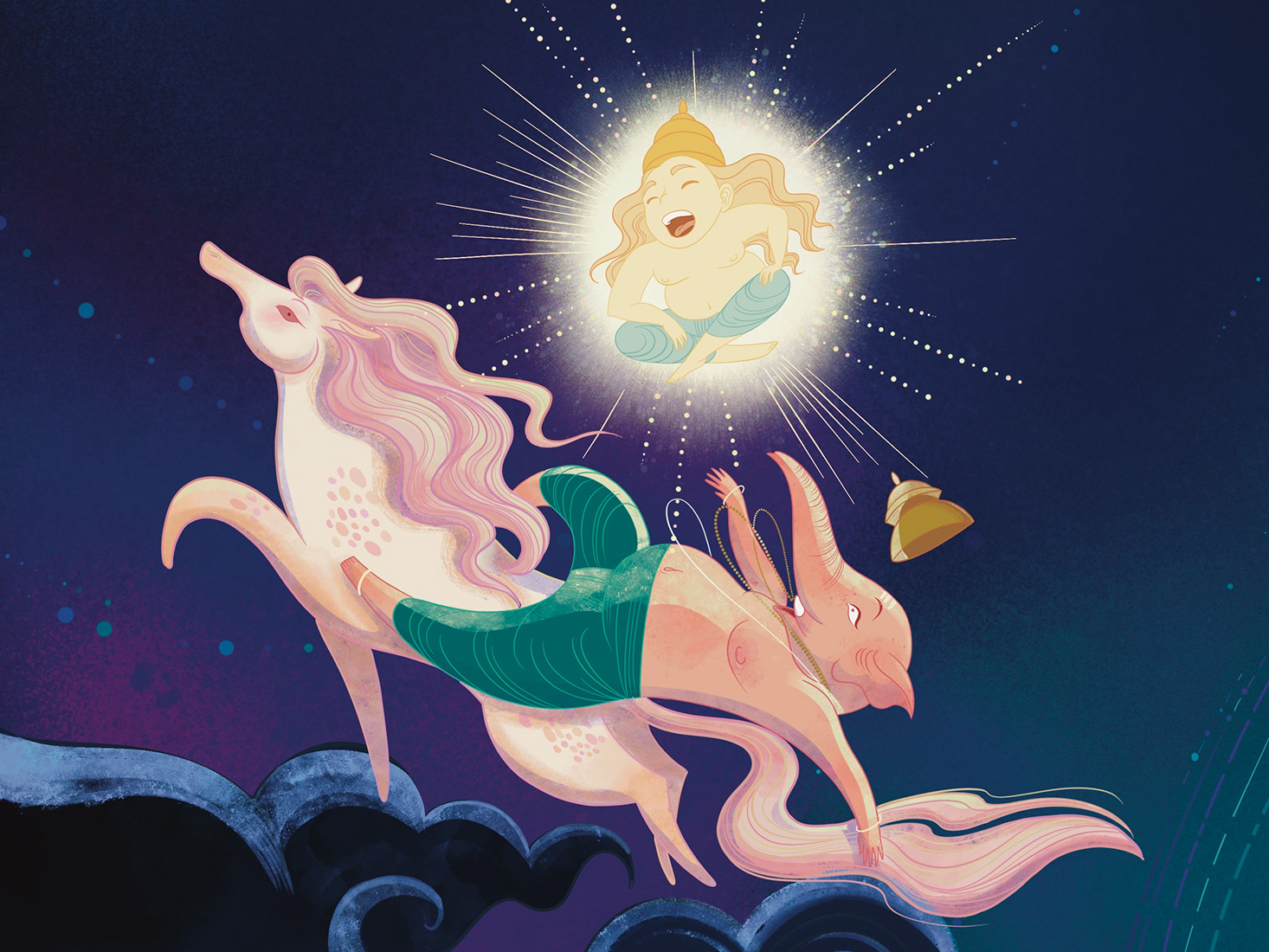
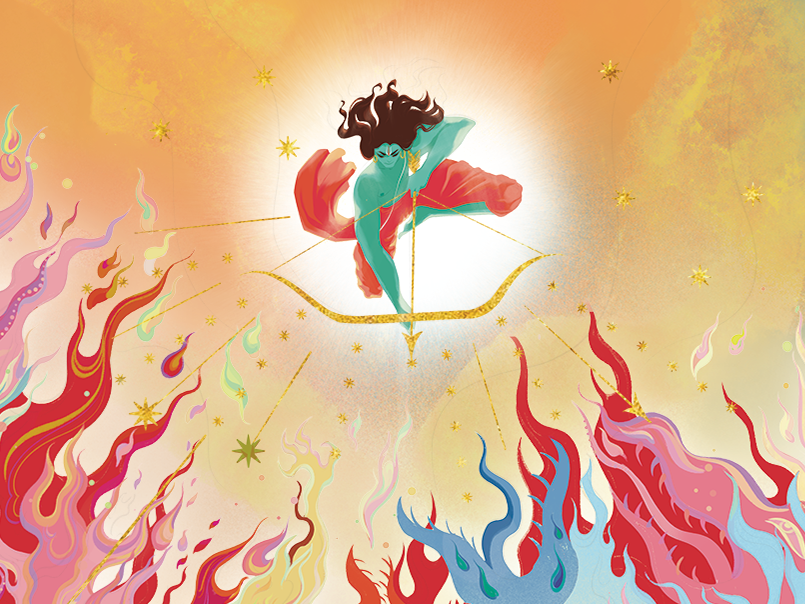
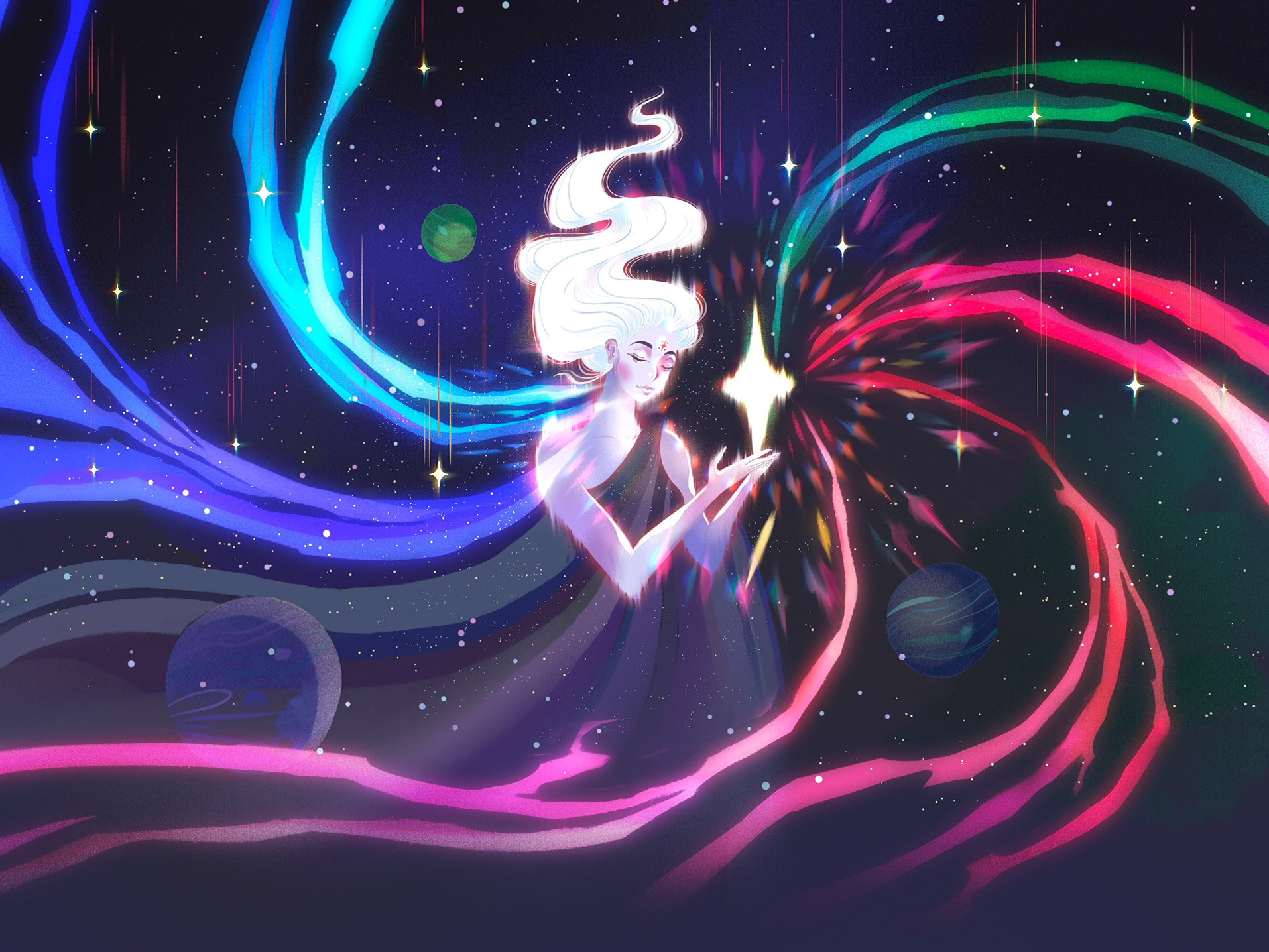
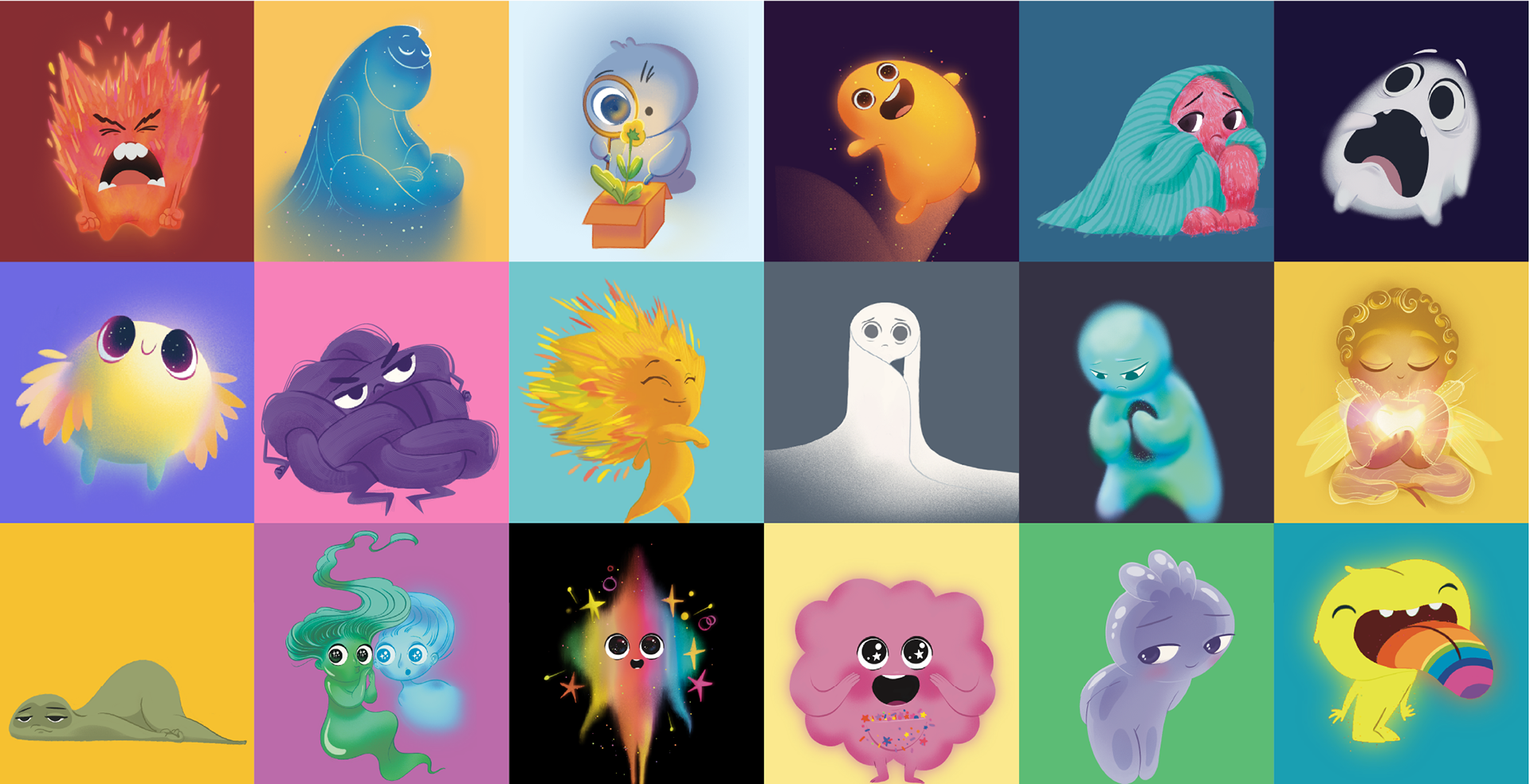
Each emotion was designed as a character.
Instead of relying only on facial expressions,
emotions are communicated through:
• Shape
• Posture
• Colour
• Movement
Instead of relying only on facial expressions,
emotions are communicated through:
• Shape
• Posture
• Colour
• Movement
This allows children to feel the emotion visually —
even before they can name it.
even before they can name it.
Character System
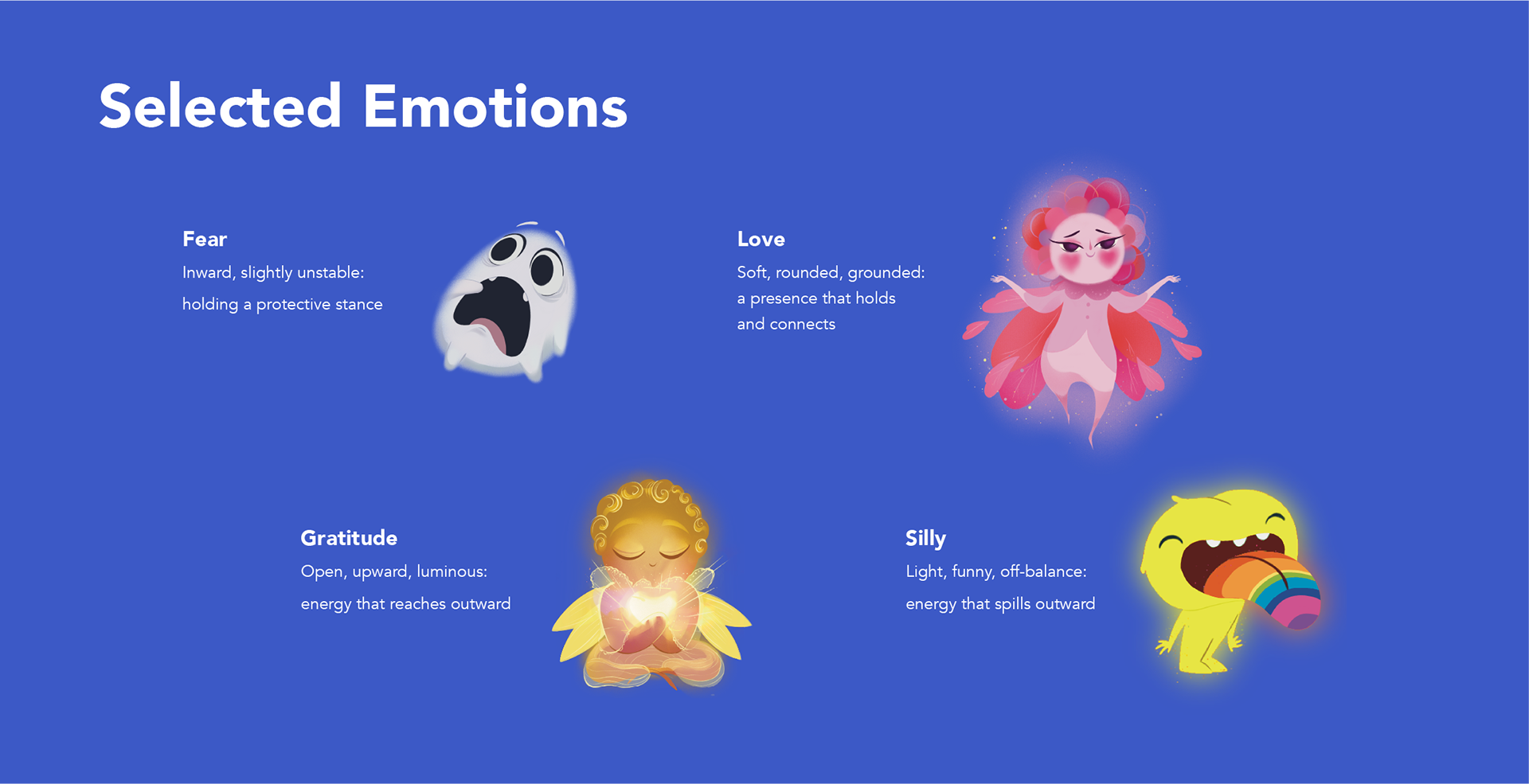
Each character follows a shared visual language,
while still expressing a distinct emotional identity.
while still expressing a distinct emotional identity.
Rounded, open forms → safe, calm emotions
Tighter, inward shapes → anxious or withdrawn emotions
Expansive, dynamic forms → joyful or energetic emotions
Tighter, inward shapes → anxious or withdrawn emotions
Expansive, dynamic forms → joyful or energetic emotions
This creates a system that is both cohesive and expressive.
Colour & Visual Language
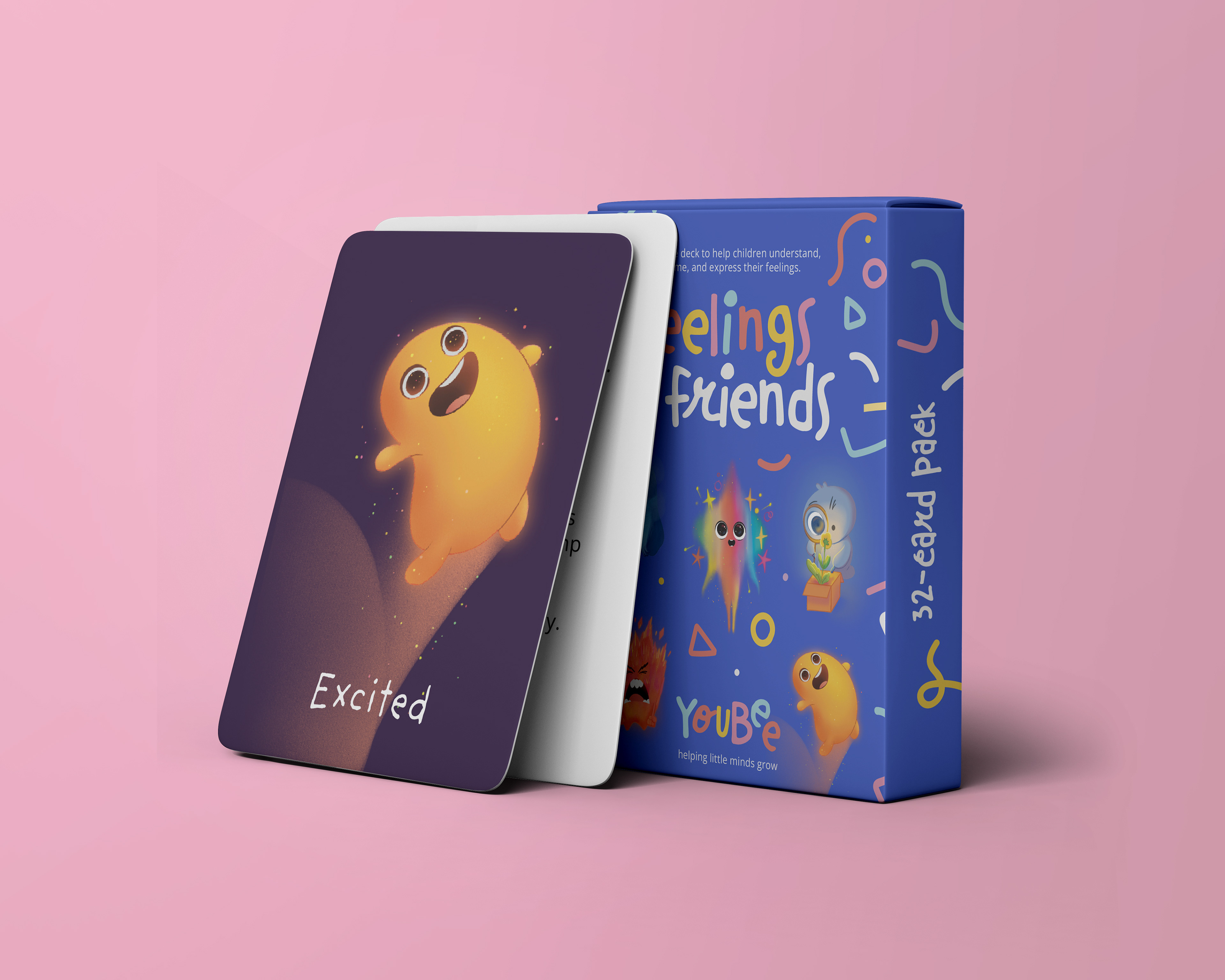
The palette was designed to support emotional clarity
without overwhelming the viewer.
• Warm tones for connection and comfort
• Cool tones for introspection and uncertainty
• Soft transitions to maintain a sense of emotional safety
• Backgrounds were kept minimal and intentional to ensure the characters remain the focus.
without overwhelming the viewer.
• Warm tones for connection and comfort
• Cool tones for introspection and uncertainty
• Soft transitions to maintain a sense of emotional safety
• Backgrounds were kept minimal and intentional to ensure the characters remain the focus.
Design Principles
• Clarity over decoration
• Emotion first, aesthetics second
• Safe representation of difficult feelings
• Consistency across all 34 cards
• Emotion first, aesthetics second
• Safe representation of difficult feelings
• Consistency across all 34 cards
This project sits at the intersection of illustration and emotional development —
using design not just to communicate, but to help children understand themselves a little better.
using design not just to communicate, but to help children understand themselves a little better.