Fire, Food & Form: Murals Rooted in
Landscape and Memory
Landscape and Memory
WALL MURAL x 2
This mural project explores food as a cultural anchor — not just as sustenance, but as a site of community,
migration, and shared memory. Developed as two distinct yet connected concepts, the murals draw from
vernacular practices, regional landscapes, and evolving culinary histories across India.
migration, and shared memory. Developed as two distinct yet connected concepts, the murals draw from
vernacular practices, regional landscapes, and evolving culinary histories across India.
At its core, the project investigates how spaces of cooking become spaces of gathering,
and how these spaces carry stories across time and geography.
and how these spaces carry stories across time and geography.
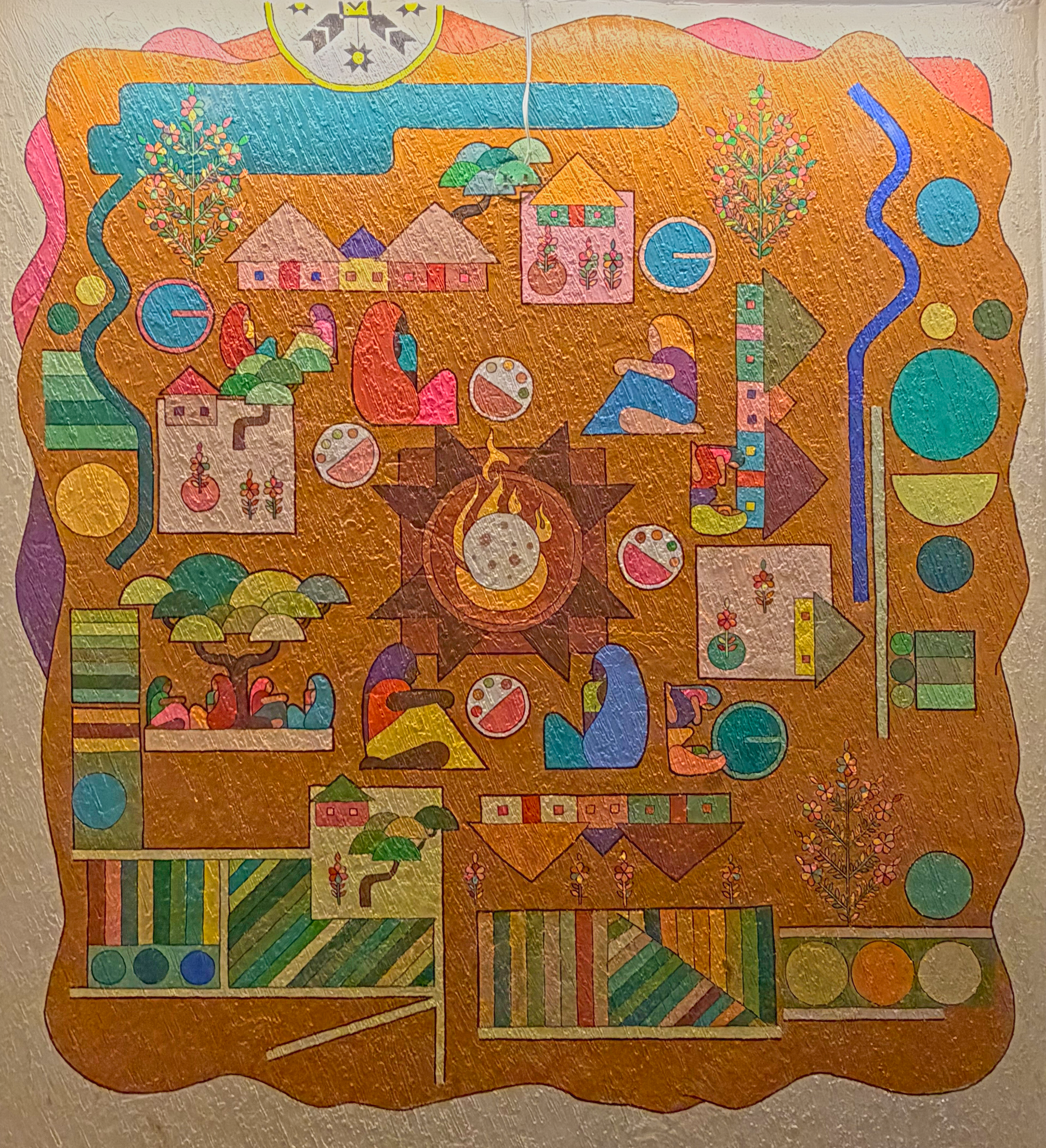
CONCEPT 01 : THE CHULHA-CHOWKI
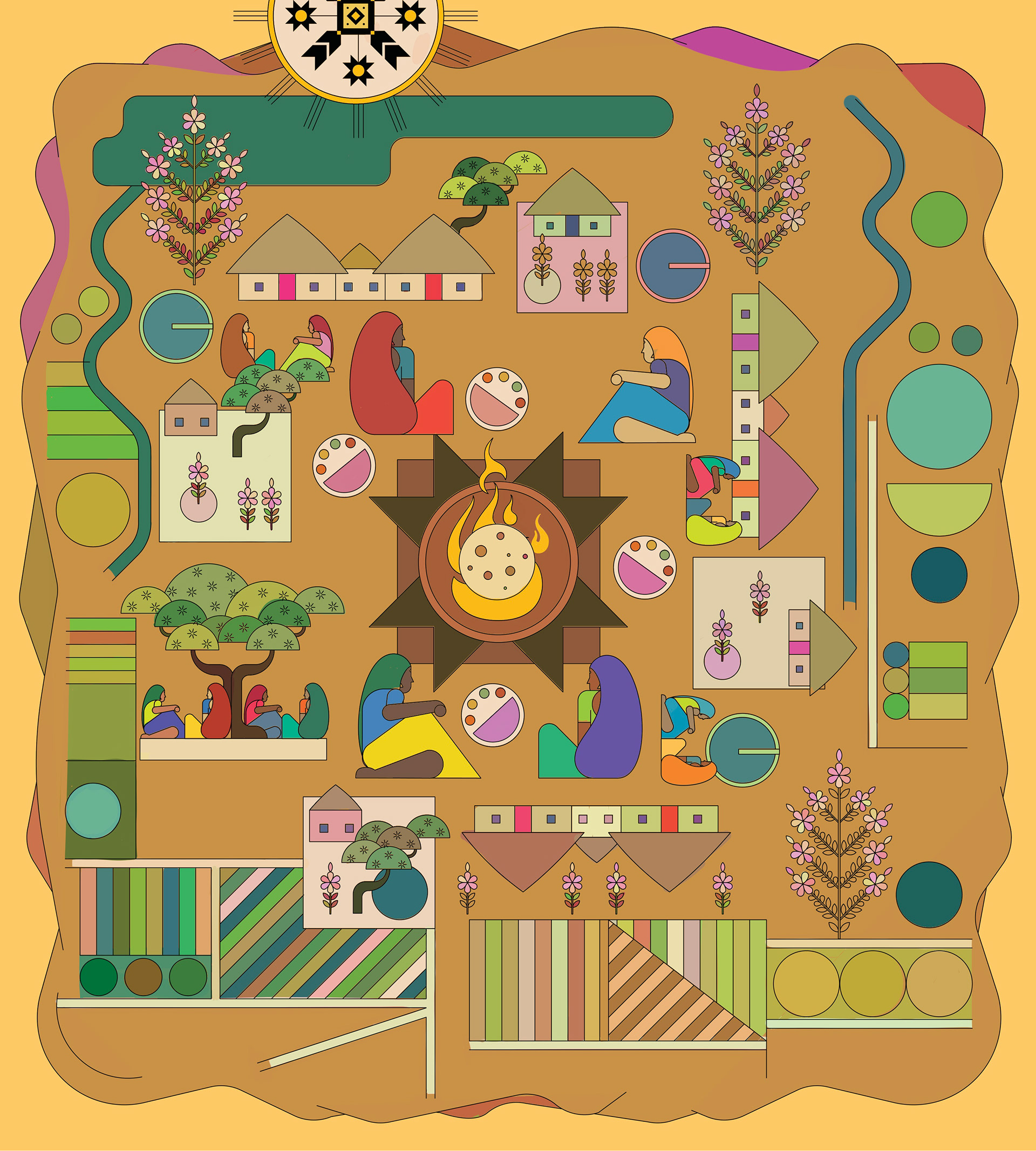
The first mural centres around the chulha-chowki — the traditional wood-fired stove used in rural Rajasthan.
More than a utilitarian object, the chulha becomes a social nucleus.
Women gather around it, cooking, serving, and sharing food in a continuous rhythm of care and labour.
Plates are passed from hand to hand, dissolving boundaries between kitchen and community.
Women gather around it, cooking, serving, and sharing food in a continuous rhythm of care and labour.
Plates are passed from hand to hand, dissolving boundaries between kitchen and community.
The composition reflects this circularity:
Figures arranged in fluid, interconnected groupings
Gestures of passing, serving, receiving
Warm, earthy tones echoing fire, मिट्टी (earth), and sustenance
Figures arranged in fluid, interconnected groupings
Gestures of passing, serving, receiving
Warm, earthy tones echoing fire, मिट्टी (earth), and sustenance
The mural captures a moment that is both ordinary and deeply symbolic —
a village coming together at the end of the day, held by the act of cooking and eating together.
a village coming together at the end of the day, held by the act of cooking and eating together.
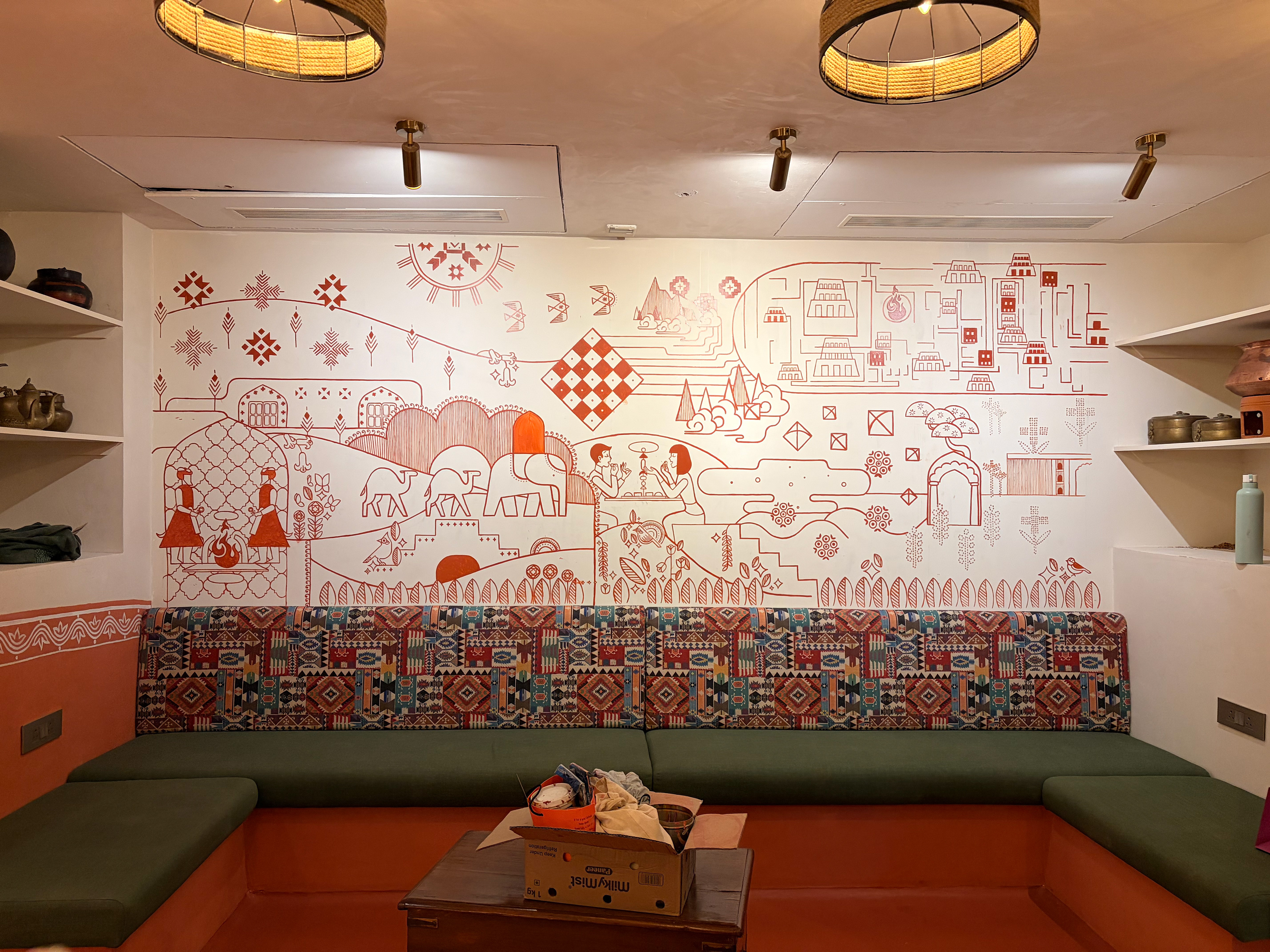
CONCEPT 02: A JOURNEY THROUGH FIRE
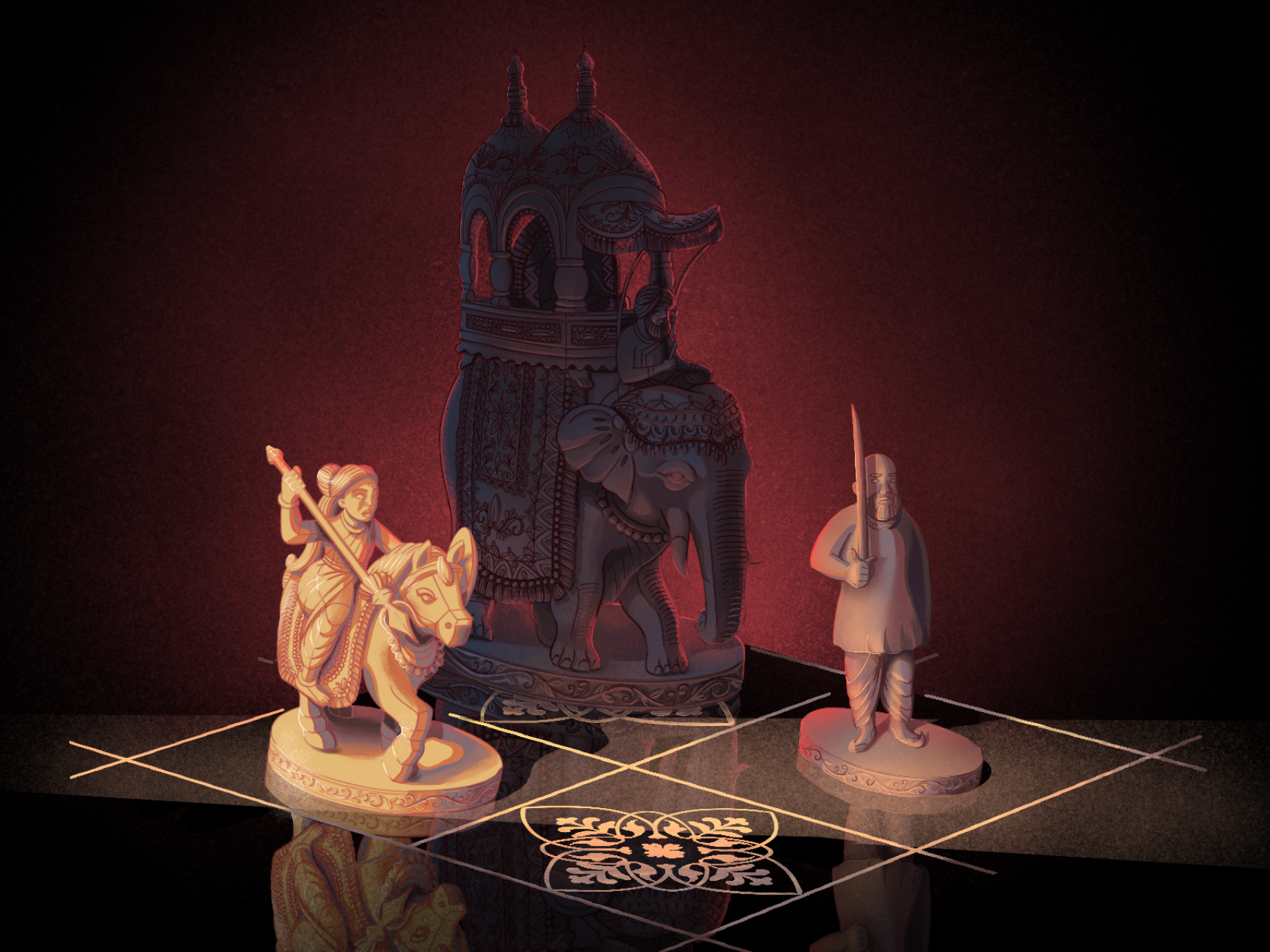
The second mural expands the narrative outward, tracing the historical and geographical journey of the tandoor.
Originating in Mesopotamia, the sunken clay oven evolved over time — carried forward by the Mughals, who adapted it into a portable form, embedding it within moving armies and shifting cultural landscapes.
From there, the mural moves across regions:
Punjab & Rajasthan
The tandoor as a communal and domestic fixture — grounding the narrative in North Indian culinary practice. This section is enriched with mirror work (shisha embroidery) and gota-inspired motifs, reflecting Rajasthan’s vibrant textile traditions and its relationship to light, ornament, and celebration.
The tandoor as a communal and domestic fixture — grounding the narrative in North Indian culinary practice. This section is enriched with mirror work (shisha embroidery) and gota-inspired motifs, reflecting Rajasthan’s vibrant textile traditions and its relationship to light, ornament, and celebration.
Uttarakhand
The terrain shifts upward into terraced fields and mountain ecologies, bringing stillness, rhythm, and ritual movement. Embroidered references become more restrained and geometric, inspired by pahadi textile traditions, reflecting the region’s material simplicity and environmental harmony.
Gujarat
Arid expanses contrast with intricate craft traditions — mirror work, surface ornamentation, and vibrant material culture. This section incorporates Kutchi embroidery and bandhani-inspired patterning, introducing density, colour, and a heightened sense of surface.
The terrain shifts upward into terraced fields and mountain ecologies, bringing stillness, rhythm, and ritual movement. Embroidered references become more restrained and geometric, inspired by pahadi textile traditions, reflecting the region’s material simplicity and environmental harmony.
Gujarat
Arid expanses contrast with intricate craft traditions — mirror work, surface ornamentation, and vibrant material culture. This section incorporates Kutchi embroidery and bandhani-inspired patterning, introducing density, colour, and a heightened sense of surface.
Uttar Pradesh
Riverine landscapes and fertile plains introduce density — agriculture, settlements, and layered cultural life. The visual language here draws from the delicacy of chikankari embroidery, with softer, more intricate patterning that echoes the region’s refinement and craft heritage.
Riverine landscapes and fertile plains introduce density — agriculture, settlements, and layered cultural life. The visual language here draws from the delicacy of chikankari embroidery, with softer, more intricate patterning that echoes the region’s refinement and craft heritage.
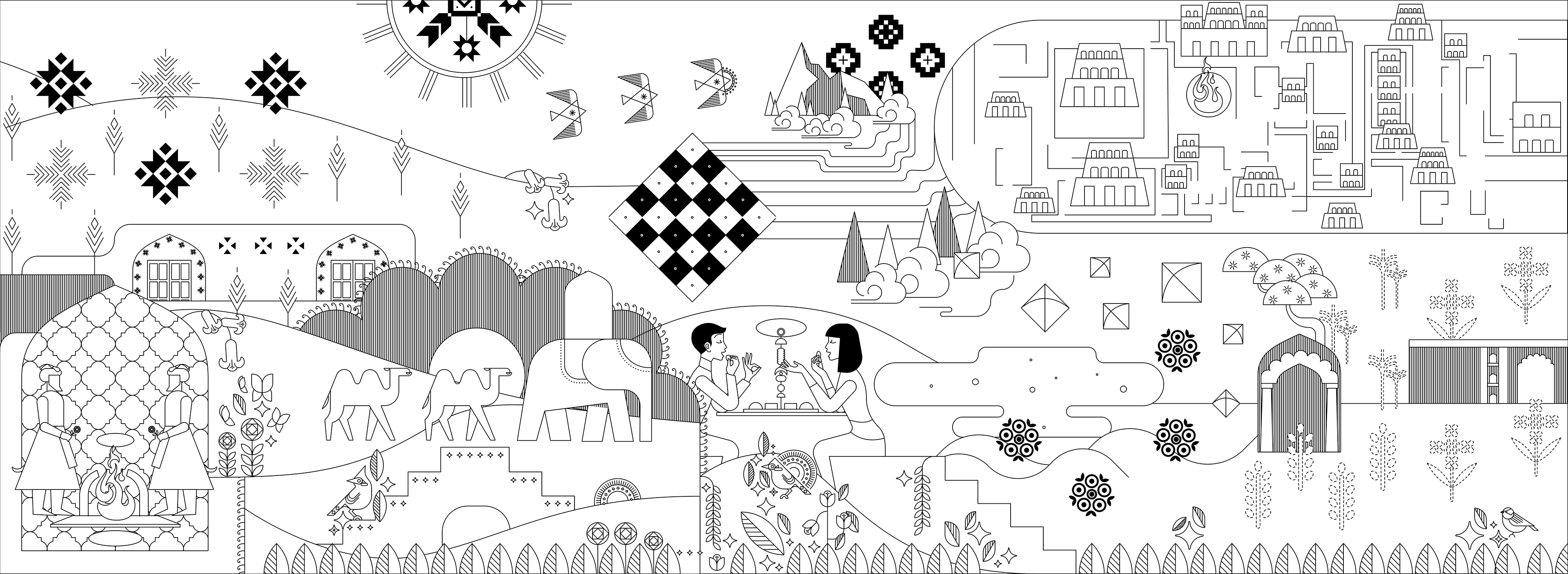
To ground the viewer within each geographical region, the mural integrates
traditional embroidery vocabularies as a visual device.
traditional embroidery vocabularies as a visual device.
Rather than treating embroidery as decoration, these motifs function as:
• Cultural markers that locate each region
• Textural shifts that guide the eye across the wall
• Bridges between craft and landscape
• Textural shifts that guide the eye across the wall
• Bridges between craft and landscape
Each region is therefore not only defined by its terrain and architecture, but also by its surface language —
allowing textile traditions to inform the visual rhythm of the mural.
allowing textile traditions to inform the visual rhythm of the mural.