Illustration • Character Design • Visual Research
Illustrate an encyclopaedic introduction to the Hindu pantheon for a general readership — fifty-three full-page and spot illustrations, one per deity — in a way that honours the depth and diversity of each figure without reducing any of them to a single fixed iconographic reading.
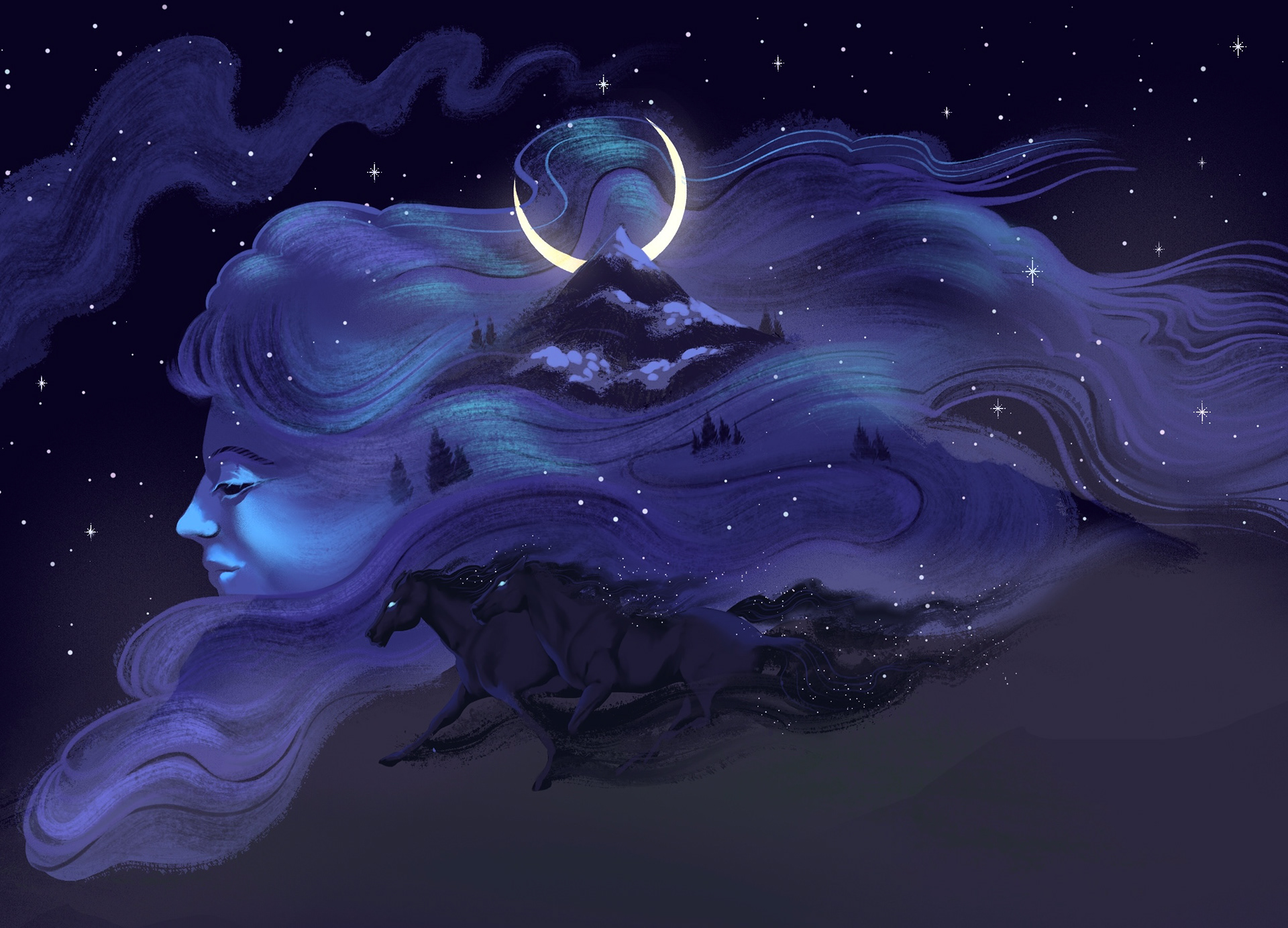
Fifty-three gods. Fifty-three distinct visual problems.
The Hindu pantheon is not a uniform collection of figures. It contains fire gods and river goddesses, cosmic tortoises and dancing destroyers, deities of wealth and deities of death. Each one arrives with centuries of accumulated iconography — with established colours, attributes, vehicles, gestures — and each one risks becoming, in illustration, exactly what that tradition already knows how to produce.
The brief was to illustrate the story. The unstated challenge was to make each deity feel
like an encounter rather than a reference.
The Hindu pantheon is not a uniform collection of figures. It contains fire gods and river goddesses, cosmic tortoises and dancing destroyers, deities of wealth and deities of death. Each one arrives with centuries of accumulated iconography — with established colours, attributes, vehicles, gestures — and each one risks becoming, in illustration, exactly what that tradition already knows how to produce.
The brief was to illustrate the story. The unstated challenge was to make each deity feel
like an encounter rather than a reference.

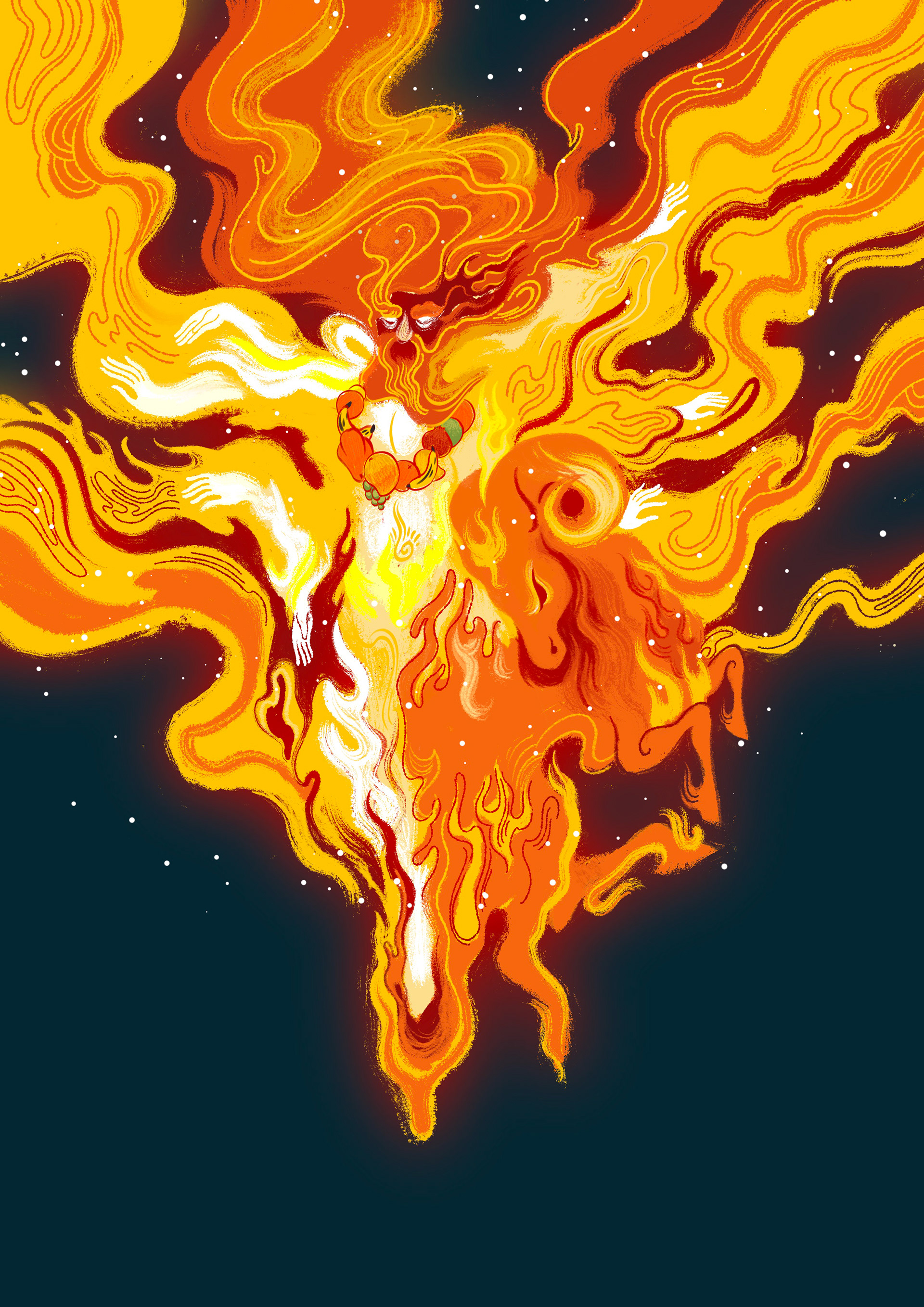
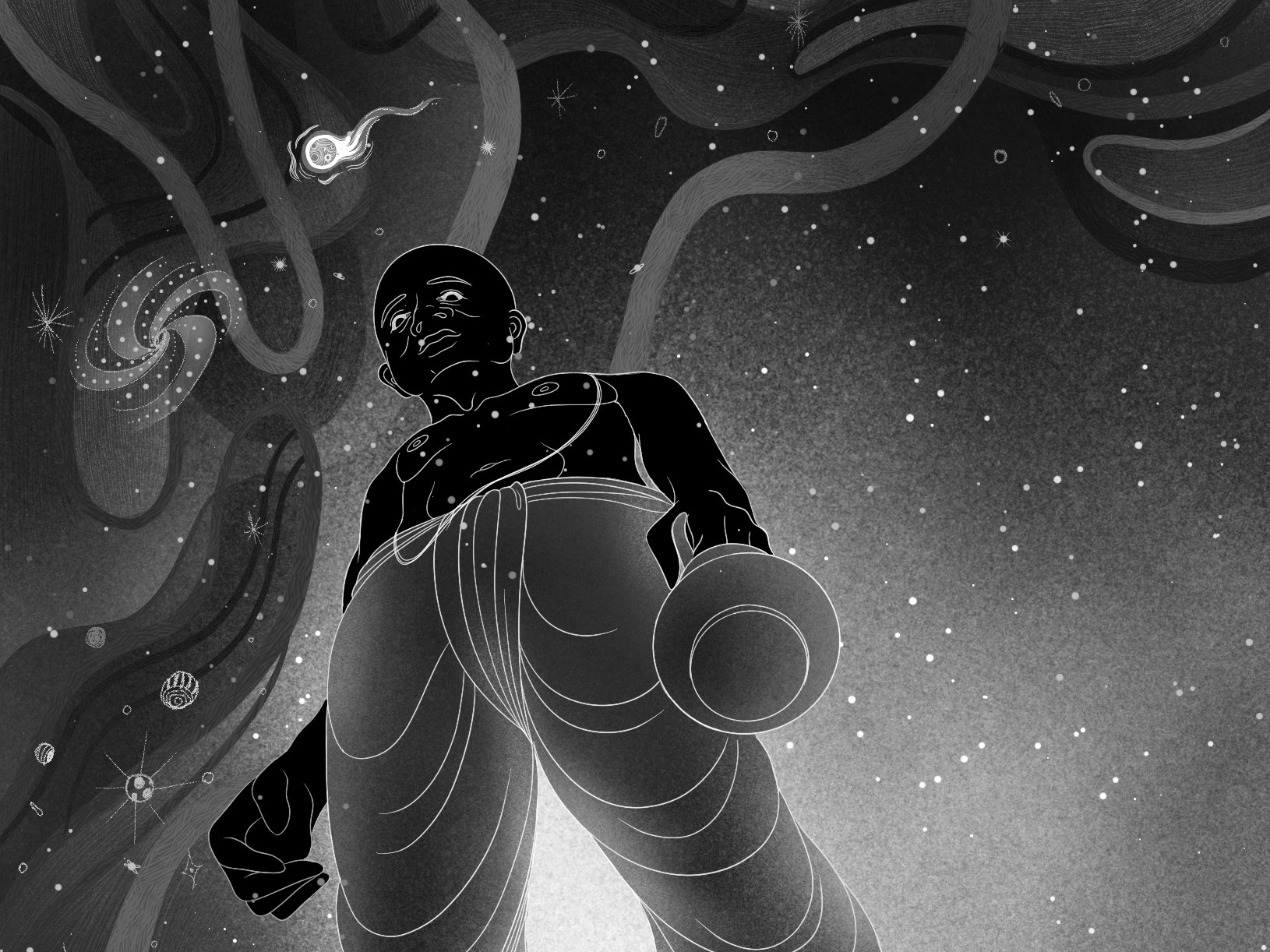
The approach varied by figure. Some gods demanded scale — Surya filling his image with light the way the sun fills a sky, Agni becoming indistinguishable from the element he governs, centrifugal and consuming. Others required a different register entirely: Varuna, god of cosmic order and the celestial ocean, rendered with a quality of cold weight — something that keeps things in place rather than radiates outward. Yamuna, the river goddess, demanded fluidity above all else: a figure that moves the way water moves,
without a fixed edge.
without a fixed edge.
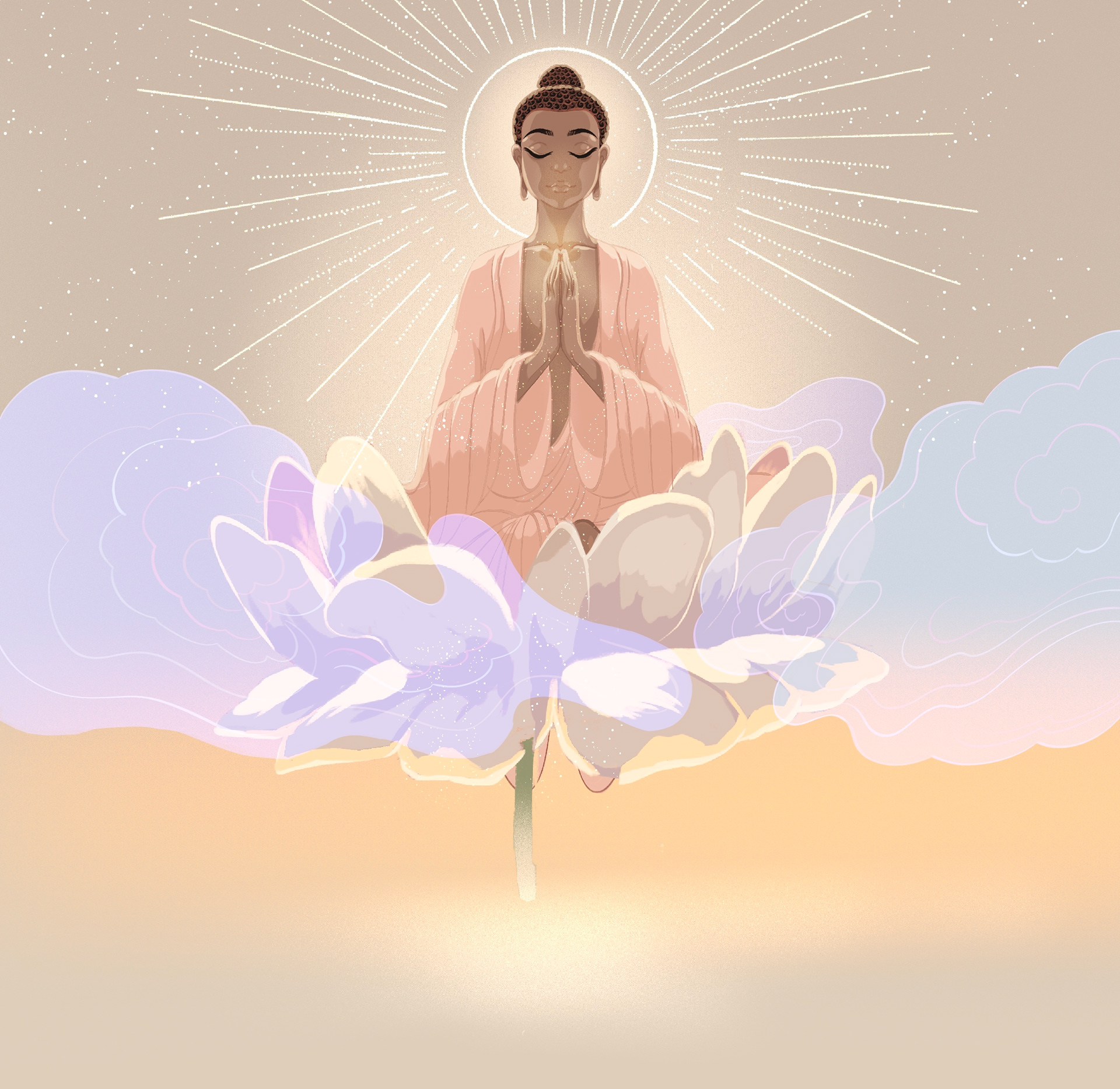
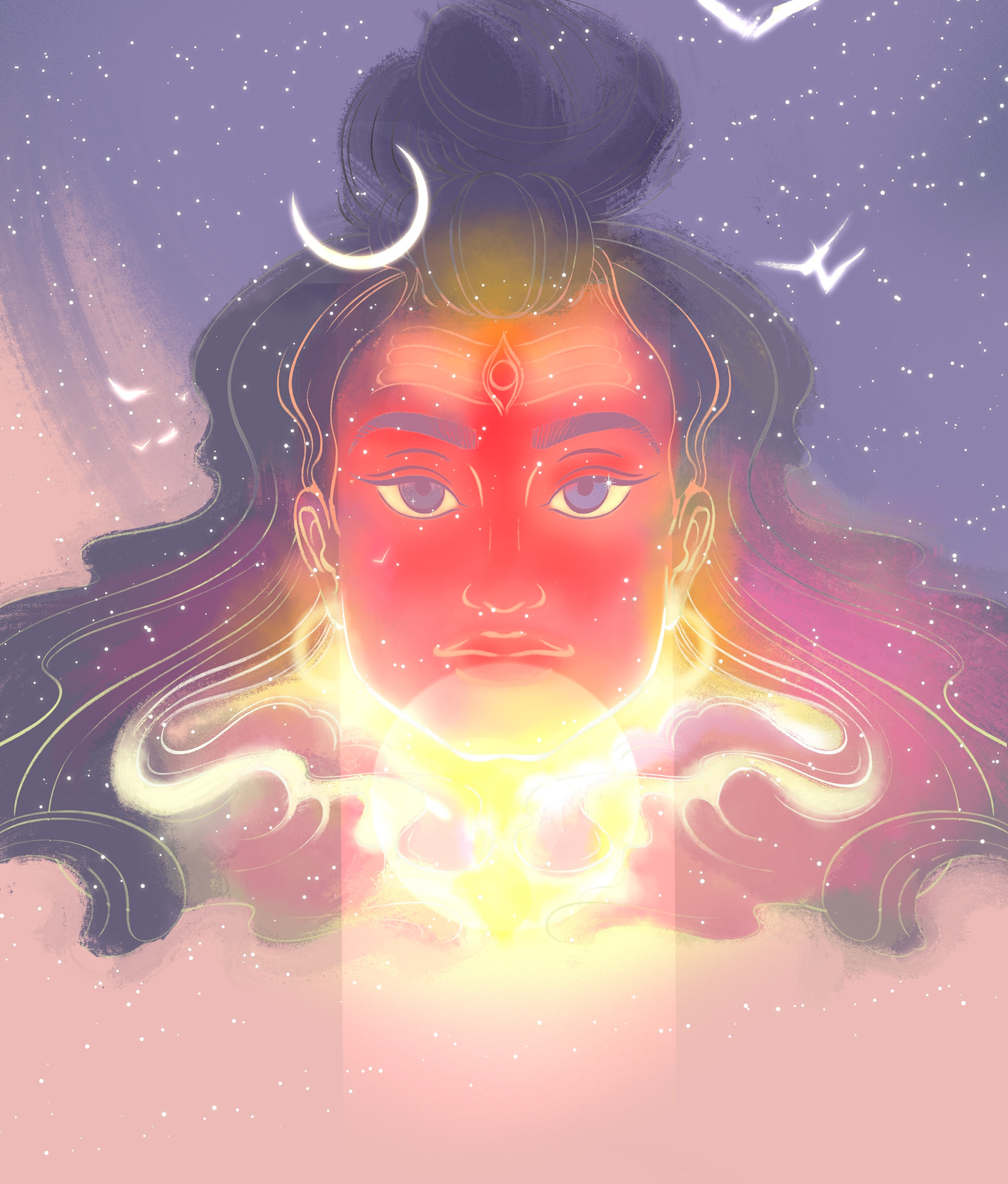
Fifty-three gods meant fifty-three different answers to the same question: what does this force feel like, from the inside of it?
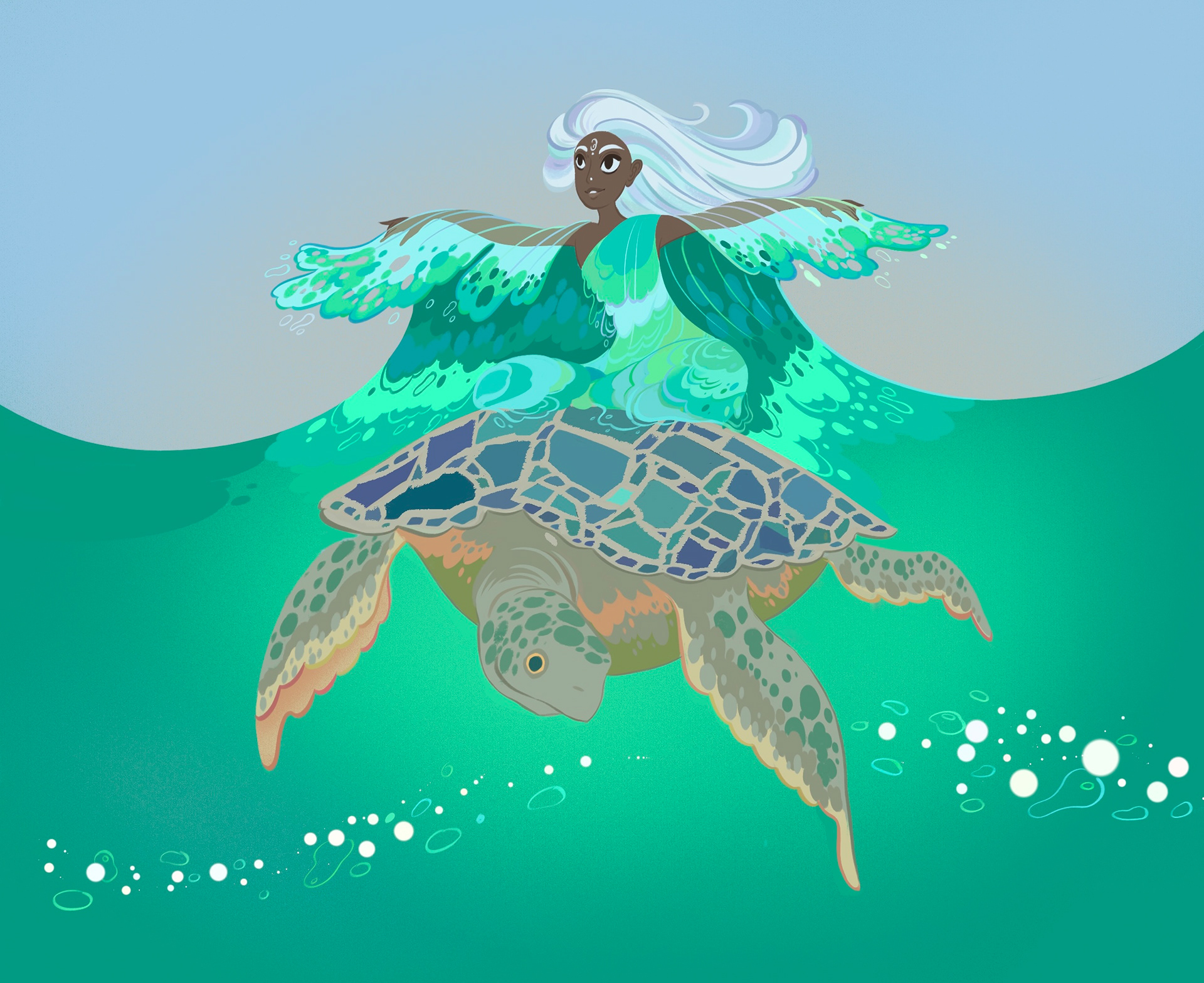
Vayu — the wind — presented the most purely formal challenge of the series: how do you illustrate the invisible? The answer was to show not the wind but what the wind does: the way it organises everything around it into movement, bends it, carries it. The god is present in the image the way wind is present in a field — through consequence rather than form.
This became a recurring principle across the more difficult figures in the book. The deity is not always the subject. Sometimes the deity is the condition under which everything else in the image exists.
This became a recurring principle across the more difficult figures in the book. The deity is not always the subject. Sometimes the deity is the condition under which everything else in the image exists.
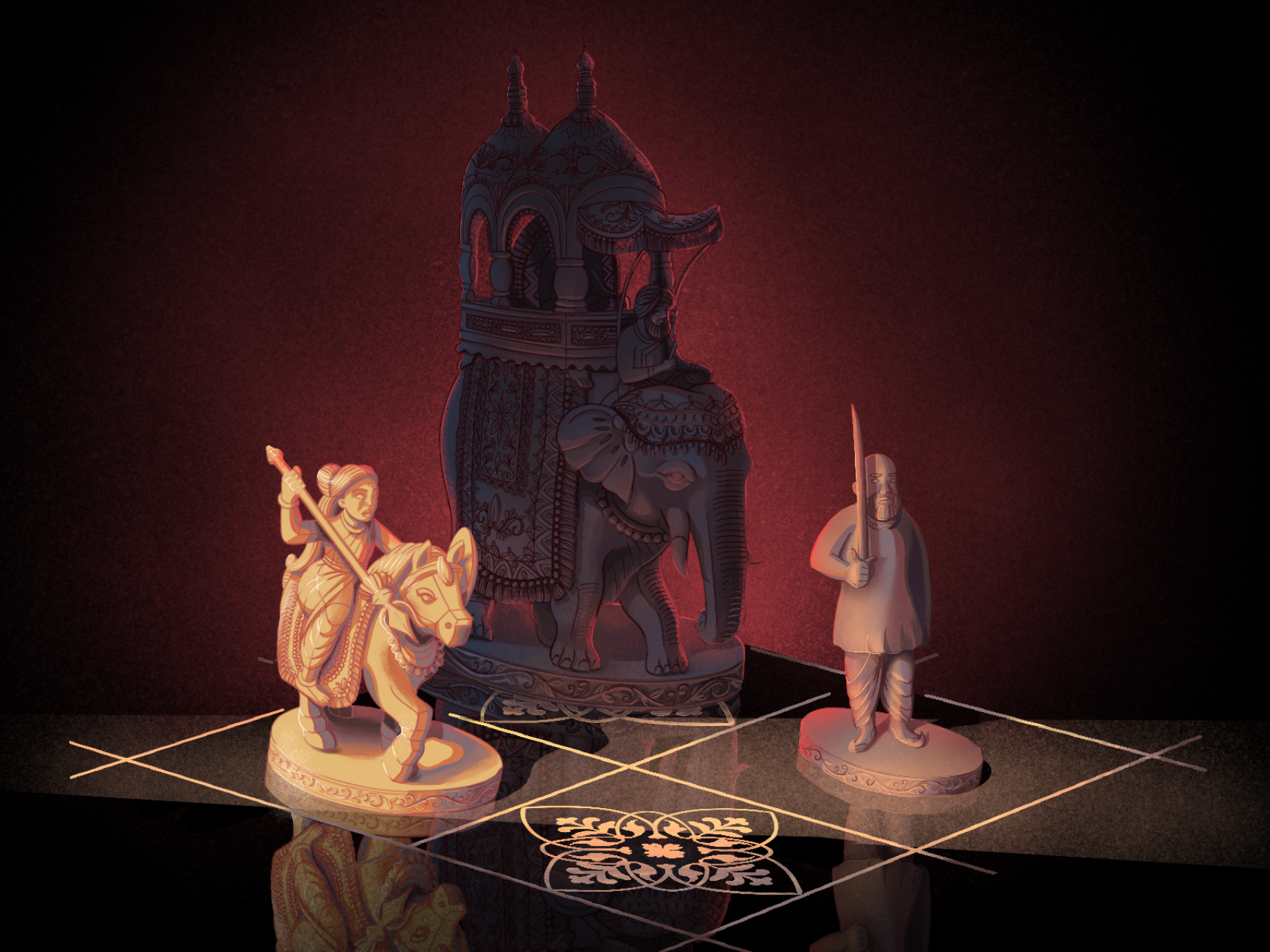
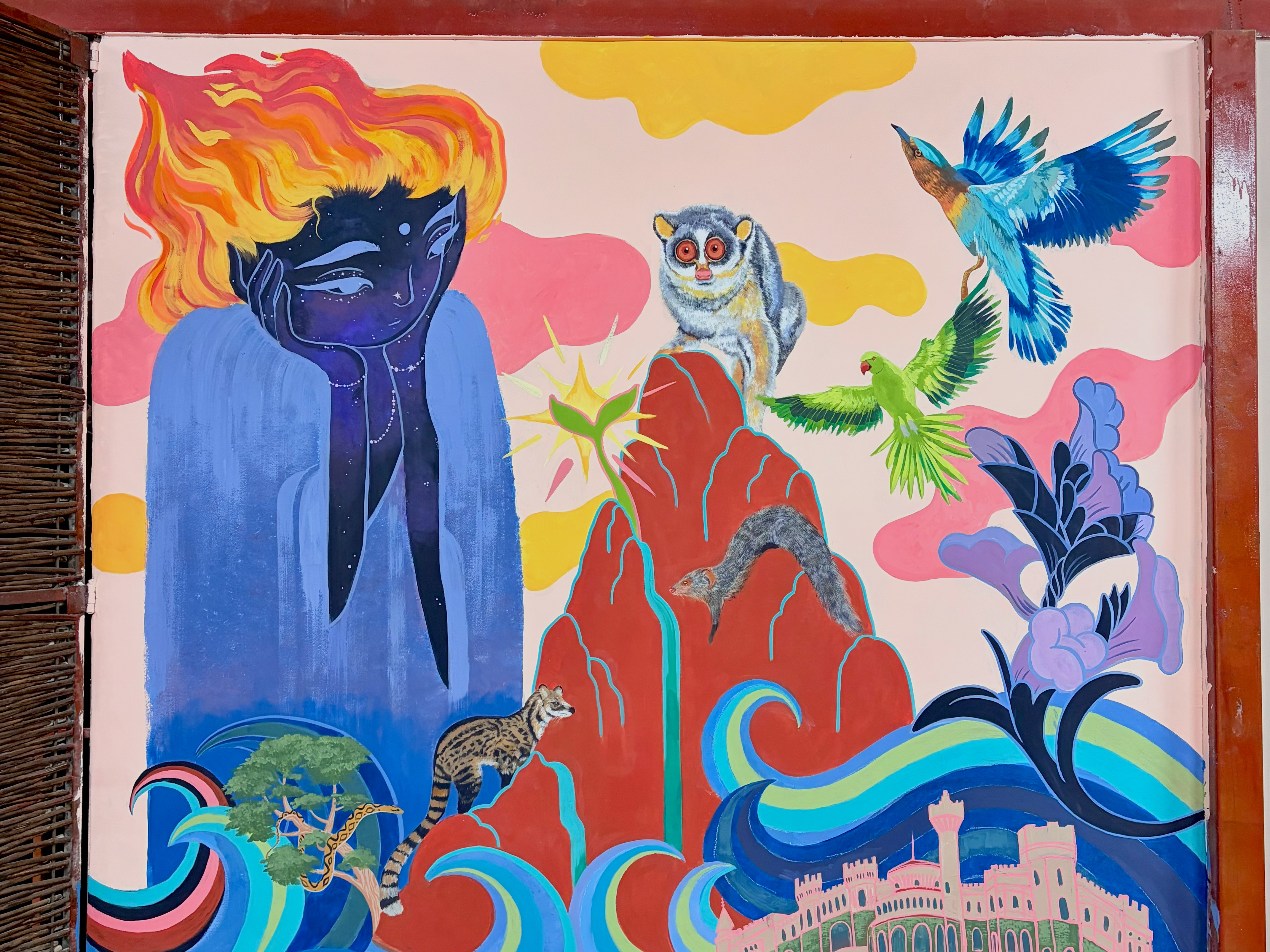
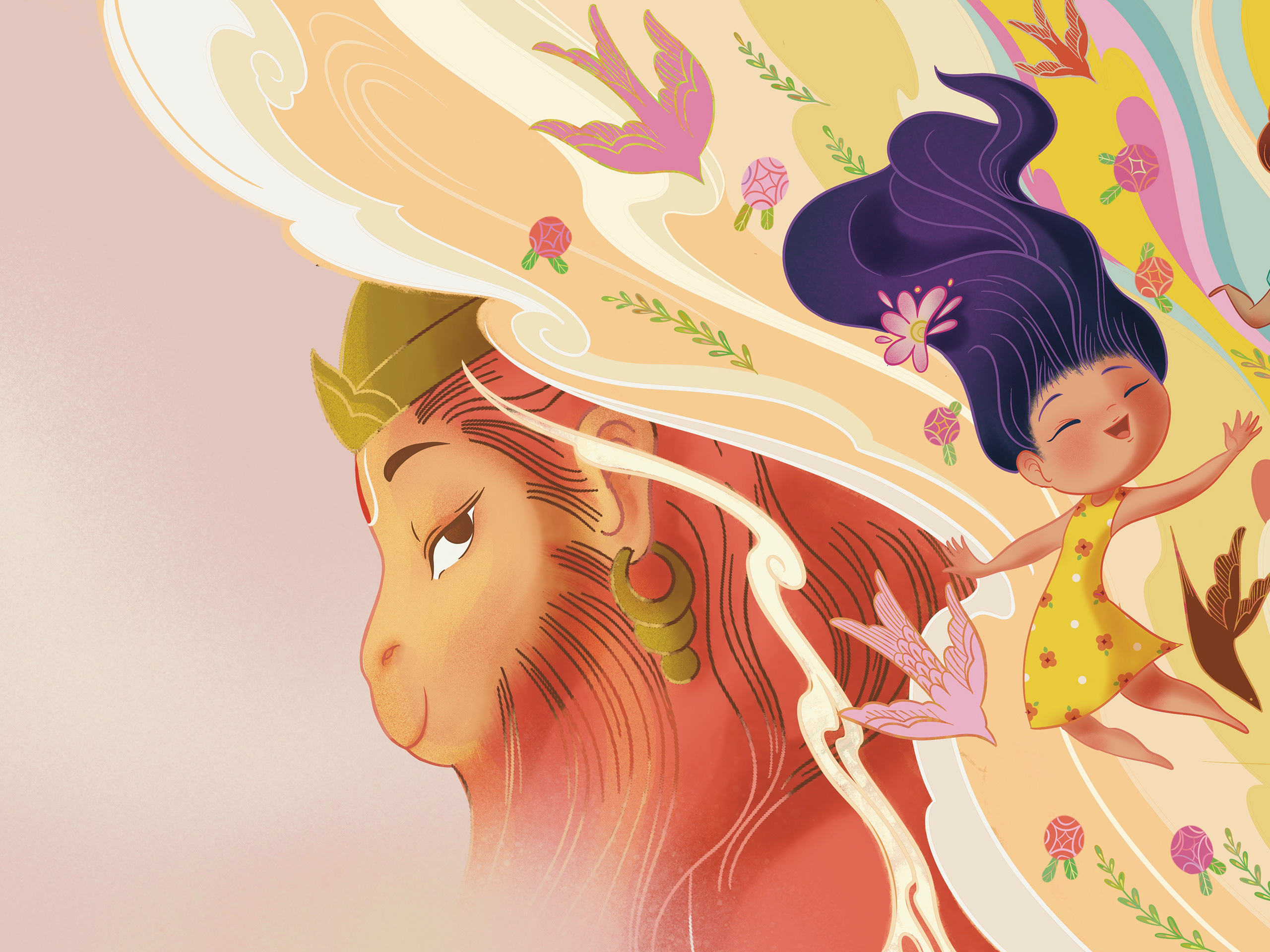
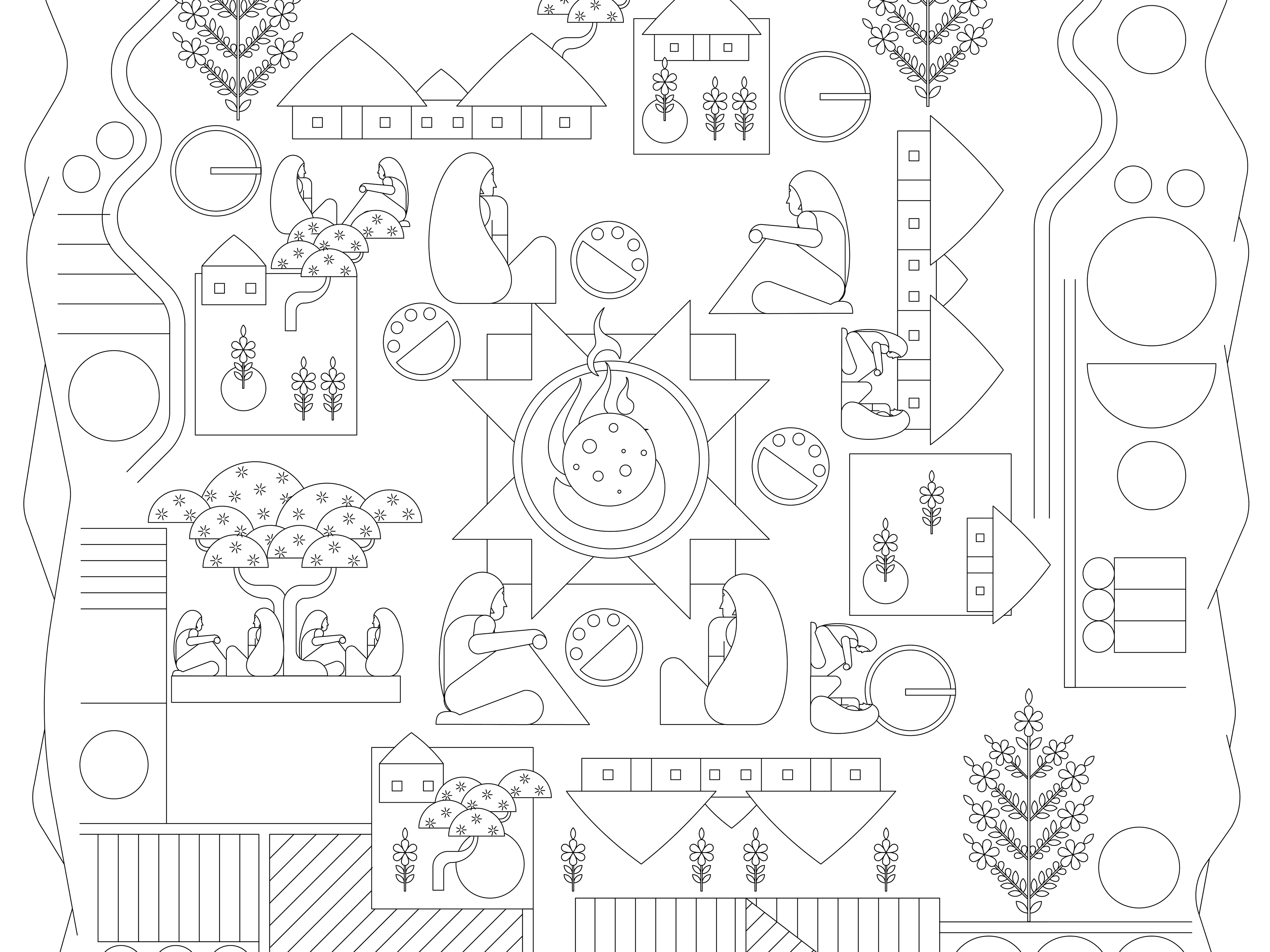
Each deity received both a full-page illustration and a spot illustration accompanying their story — two different registers of the same subject, one expansive and one precise. The full-page images were permitted to be atmospheric, even overwhelming. The spots had to be clear enough to function at small scale while retaining enough complexity to reward attention. Calibrating between those two modes, fifty-three times over, was its own discipline.
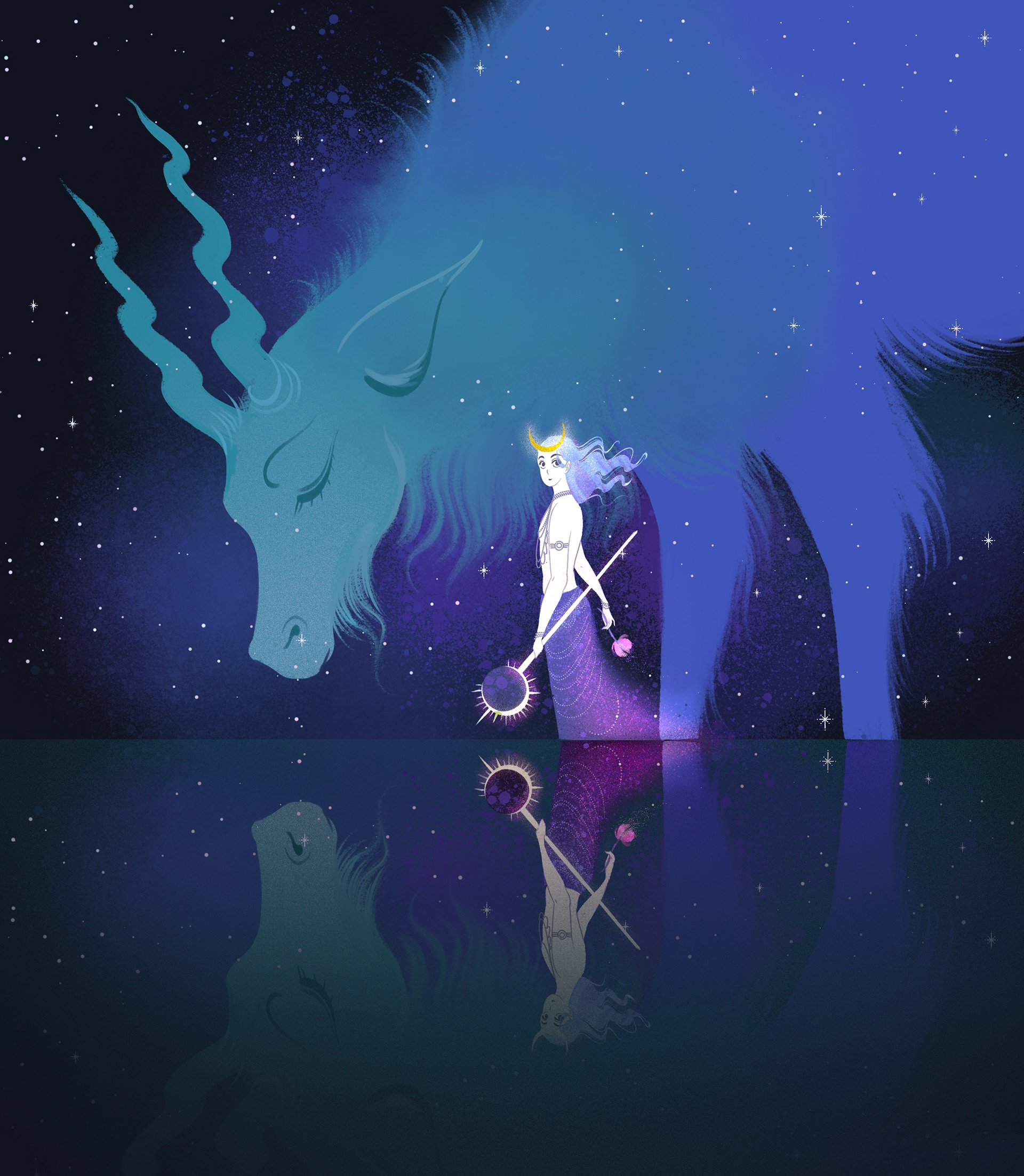
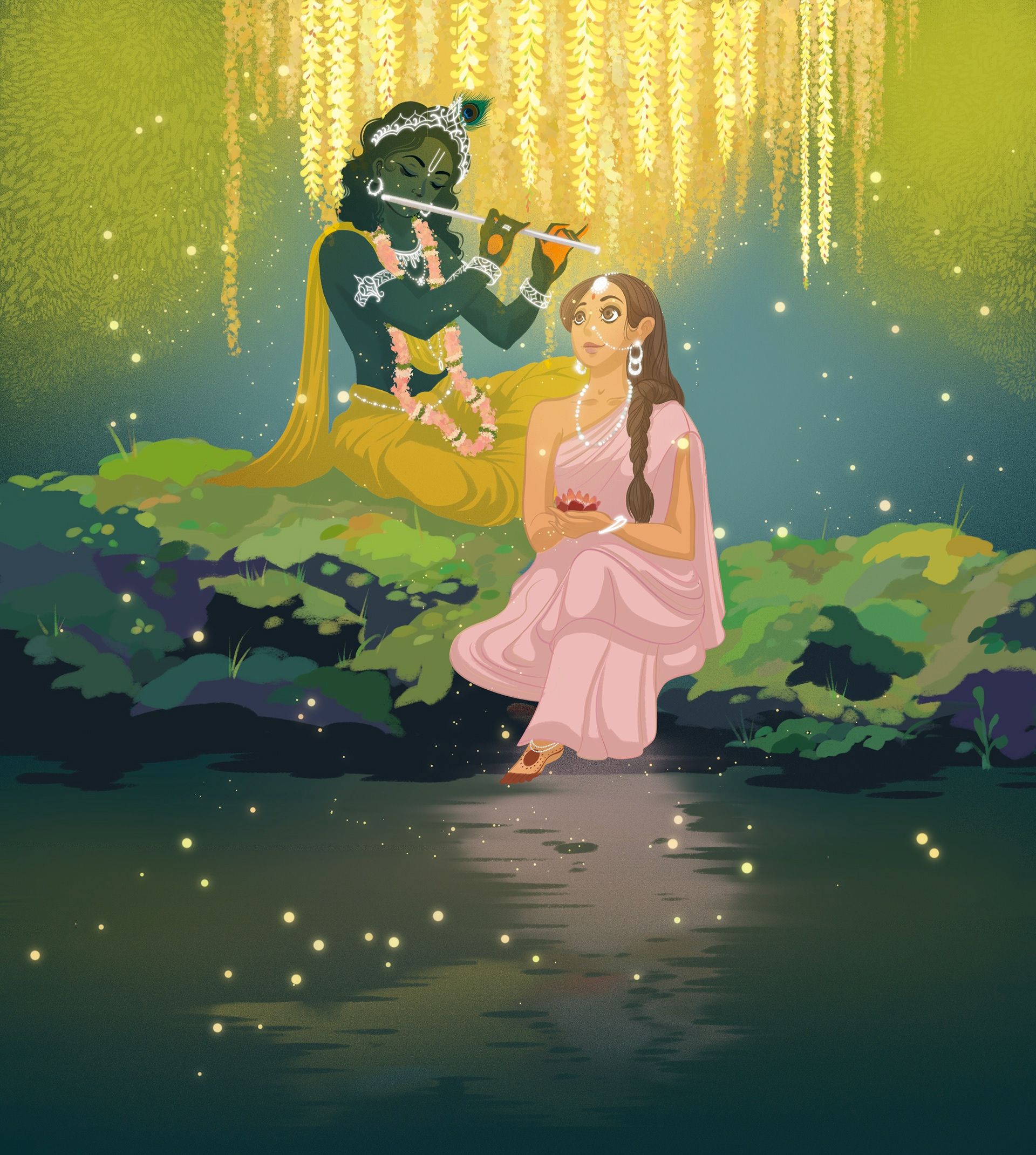
The Hindu pantheon has been illustrated for centuries. This project was not an attempt to replace that tradition — it was an attempt to find what was still unresolved within it. Fifty-three gods, and in each one, a slightly different question about what divinity looks like when it is not at a safe distance.
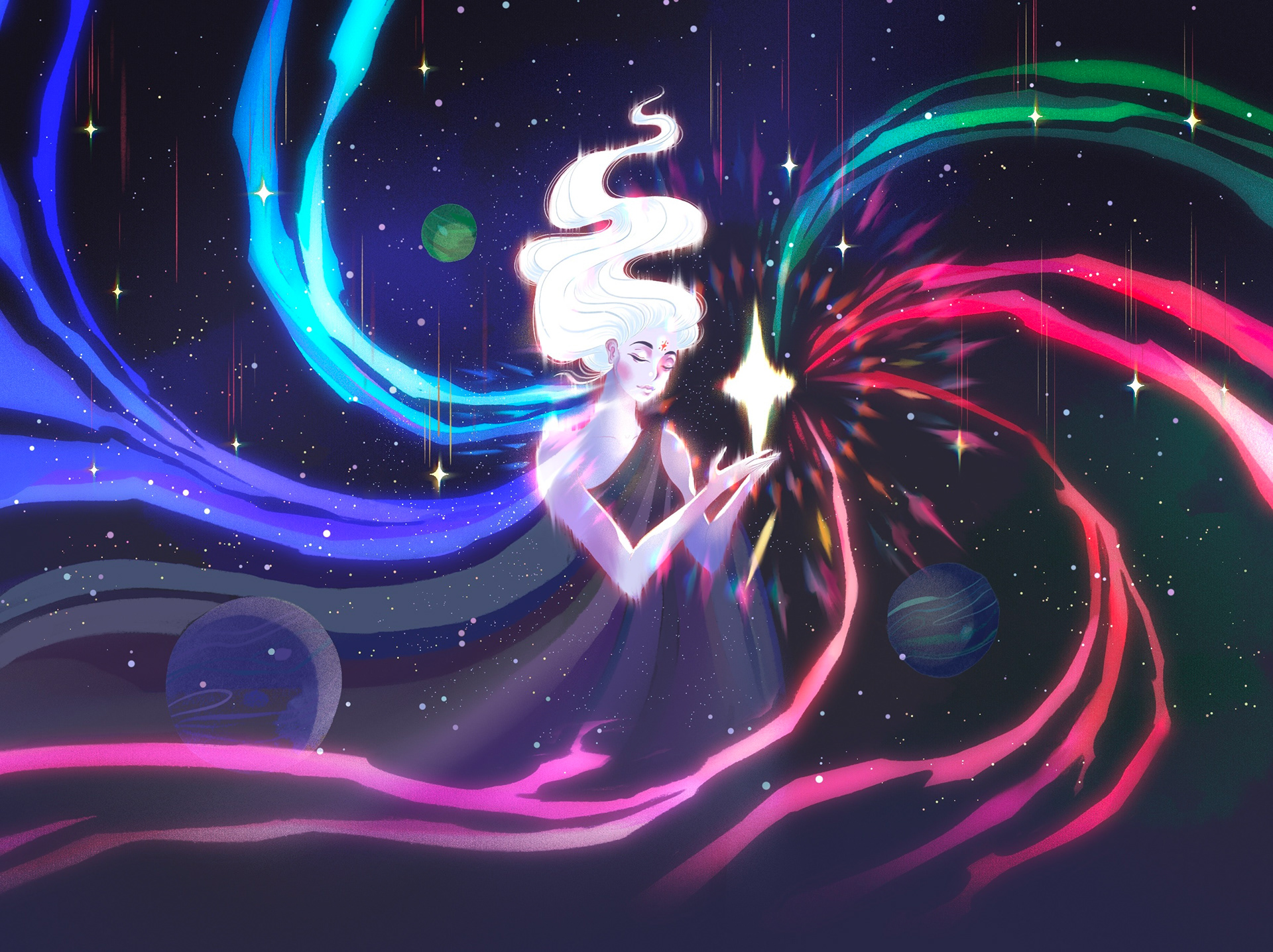
The Hindu pantheon has been illustrated for centuries. This project was not an attempt to replace that tradition — it was an attempt to find what was still unresolved within it. Fifty-three gods, and in each one, a slightly different question about what divinity looks like when it is not at a safe distance.
Project: 50 Gods and Goddesses: An Introduction • Author: Sunanda Verma • Publisher: Westland Books
Studio: Studio Apara • Scope: Full Book Illustration
Studio: Studio Apara • Scope: Full Book Illustration